about ryan and occamize
Most marketing teams don’t have an ideas problem. They have a process problem.
You’ve tried new agencies, new creatives, new dashboards – and results still feel random. Some months the numbers look great in-platform, other months they tank, and no one can explain why.
After a decade in analytics, CRO, and paid advertising for ecommerce and lead‑gen, I kept seeing the same pattern: smart teams making big decisions off broken measurement and ad‑hoc “let’s try this” testing. Not a lack of effort – a lack of a reliable process.
I started Occamize to fix the listening side of marketing. Measurement is how we listen, marketing is how we respond. I work directly with founders and marketing leaders to rebuild measurement, install a simple weekly optimization rhythm, and connect Meta and Google spend to what actually shows up in your revenue.
If you want a percentage‑of‑ad‑spend agency to keep your Meta and Google accounts busy, there are plenty. If you want a partner focused on growing the business and proving it in your numbers, that’s what Occamize is for.
- Ryan Levander, Founder of Occamize

what we do
Customer acquisition that starts with measurement, not guesses.
Occamize runs your customer acquisition system across Meta, Google, creative, analytics, email, and AI‑assisted operations – all organized around one goal: reliably turning ad spend into new revenue for ecommerce and lead‑gen companies.
Paid Acquisition: Meta & Google
We plan, build, and manage your Meta and Google campaigns as one system: budgets, structure, audiences, and weekly optimization loops aimed at profitable customer acquisition, not just platform performance.

Creative Strategy
We define the angles, messages, and offers your ads should lead with across Meta and Google, based on your numbers, your customers, and your actual unit economics – not vague “brand vibes.”
Creative Iteration & Testing
We turn that strategy into a steady drumbeat of new ads, structured tests, and clear winners and losers, so creative becomes a repeatable process instead of random one‑off ideas.
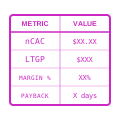
Measurement & Revenue Analytics
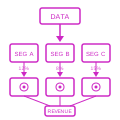
We install and maintain a clean edge to edge tagging system across Meta, Google, your site (GA4), and your revenue systems Shopify/CRM/etc) so you can see new vs returning customers, true nCAC, and which campaigns actually grow the business.
Email & Lifecycle
We design and refine the core flows (welcome, browse, cart, post‑purchase, reactivation) so more of the traffic you’ve already paid for turns into customers and repeat buyers.

AI Ops Strategy
We design AI‑supported workflows for reporting, experimentation, creative briefing, and QA, so your team spends less time on manual grunt work and more time making decisions that move revenue.
See Exactly How Modern Edge Tagging Should Be Set Up
Download the same high‑resolution edge‑tagging diagram I use in conference talks and client work. It clearly shows how to pass events from your site through your own domain and data warehouse back into Meta, Google, TikTok, and more, so you get cleaner conversion measurement even with consent mode, ad blockers, and privacy restrictions.
Get a custom Conversion Diagnostic™ as a bonus 📄
Book a free customer acquisition call with Ryan
On this call, we’ll review how you’re currently acquiring customers through Meta and Google, how your measurement supports scaling, and whether it makes sense to work together.
Afterward, you’ll get a custom Conversion Diagnostic™ outlining the top fixes to make before you push harder on spend.
Now booking February and March starts.
Once those slots are full, new projects waitlist.

Conversion Diagnostic™
Receive a FREE custom PDF showing how ready your current measurement is to scale Meta & Google ads.

questions?
Frequently Asked Questions
What's your pricing model?
Do you require long-term contracts?
Do you take on one-time projects?
What does the first 30 days look like?
What's the minimum ad spend to work together?
What types of businesses are the best fit?
Who's NOT a good fit?
Do you manage the ad accounts or just advise?
Occamize helps ecommerce stores and lead‑gen companies running Meta and Google ads replace broken measurement and attribution theater with a simple optimization system tied to real revenue, not platform ROAS.
Company
Resources
Team

Ryan Levander
Founder, Chief Problem Solver

Stringbean
8th Year Intern, Chief Fun Officer
© 2026 Occamize LLC. All rights reserved.